XC3 Weaponlight

Whiskey TwoFour’s Slick Back Panel 14 for Spiritus Systems LV-120 Plate Carrier

February 3rd, 2026

WTF’s slick Back Panel 14 for Spiritus Systems LV-120 plate carrier features a 1.5″ x 6″ loop field with ample real estate for IFF, morale patches, and similar while Six (6) nylon webbing loops offer lashing points for optional shock cord.



To discourage accidental separation from the carrier, the back panel’s zipper pull tabs tuck securely and silently into milspec elastic loops at the base. Laser cut VELCRO Brand ONE-WRAP minimizes weight and offers a secure connection to the LV-120’s loop field.

Zip-On Back Panel 14 for Spiritus Systems LV-120 (size medium) is lightweight at just 3.4oz / 99g. Introductory price. Made in the USA with Berry and IRR/NIR compliant fabrics.

Zip-On Back Panel 14 for Spiritus Systems LV-120 uses MIL-DTL-32439 500D nylon, A-A-55126 nylon hook & loop, A-A-59826 bonded nylon thread, MIL-W-5691 nylon elastic, heavy duty YKK A-A-55634 zippers, and well compensated, skilled labor to produce a cost effective part.

wtfidea.com

all trademarks, brands, etc are the sole property of Spiritus Systems Company, Inc. Spiritus Systems Company, Inc do not endorse this product

Mission First Tactical Introduces MFT Ultra Low Ride Holster

February 3rd, 2026

With Plus Size Comfort
Horsham, PA – (January 30th, 2026) – Mission First Tactical (MFT) proudly introduces the MFT Ultra Low Ride IWB Holster for deep concealment. It sits a full 1.5” lower at the waist than other standard AIWB holsters, offering larger-framed individuals all day comfort. And for everyone else this innovative holster design excels while you’re seated keeping the grip clear of your seatbelt for pinch-free comfort and easy access while driving.

“Comfort and concealment are what we wanted to achieve here,” said Bobby McGee, EVP of Product Management & Innovation at MFT. “We made a this Ultra Low Ride Holster a more concealable profile while utilizing the design and technology elements we are known for.”

Experience ultimate discretion with the new MFT Ultra-Low Ride Holster. This unique holster positions your firearm below the beltline for a virtually invisible profile. It offers an ultra-low-ride position that aligns perfectly with your body’s natural curves. This ensures a quick and easy draw with maximum comfort and effortless concealment. When converted to an outside the waistband (OWB) holster, the MFT Ultra Low Ride Holster sits below the waistline or “spare tire” as some refer toit, for a more comfortable conceal carry. This state-of-the-art holster is ambidextrous and features adjustable retention with audio click confirmation and comes with a 1.5’ belt clip.

MFT Holsters are handmade to precise tolerances for each handgun model, using the most advanced techniques and materials for an all-day comfortable carry. Adjustable retention and the famous “audible click” confirmation assures each draw and re-holstering is smooth and secure, ideal for concealed carry. This holster is available in OWB, IWB, Minimalist IWB and a variety of Mag Pouches to suit any need.

Features:

• OWB convertible
• Plus-size comfort
• Ambidextrous
• Made in the USA
• Lifetime warranty

MSRP: $59.99

To learn more about Mission First Tactical and their completeproduct lineup, please visit www.missionfirsttactical.com. Stay connected with the latest updates by following MFT on Facebook and Instagram.

SHOT Show 26 – Alpineaire

February 3rd, 2026

If you’re looking for freeze dried menus for hunting and camping trips or to supplement your field rations or survival stocks, check out Alpineaire. Their menu line up will definitely offer some variety to your diet.

Founded in 1979, Alpineaire is part of the Katadyn Group which is well known across the globe for its war purification systems.

Alpineaire Menu for 2026:

• Peanut Butter Banana Oatmeal (NEW 2026)

• Chicken Chow Mein (NEW 2026)

• Chicken Tikka Masala (NEW 2026)

• Thai Chicken Green Curry (NEW 2026)

• Three Bean Trailblazin’ Chili with Beef

• Hearty Beef Stew

• Creamy Beef and Noodles with Mushrooms

• Kung Pao Beef

• Forever Young Mac and Cheese

• Mexican Style Beef Bowl

• Mexican Style Veggie Bowl (with Rice and Beans)

• Ginger Stir Fried Rice with Beef

• Country Potato Soup with Cheddar and Chives

• Pork Jambalaya

• Creamy Broccoli Cheddar Rice

• Al Pastor with Cilantro Lime Rice

Spicy African Peanut Stew with Sweet Potatoes

• Spicy Sausage Pasta

• Wild Mushroom Fettuccine Alfredo

• Pork Pad Thai

• Tuscan Style Pasta Roma

• Chilaquiles Verdes with Carnitas

• Three Bean Chili Pasta

• Rustic Three Cheese Sausage Lasagna

• Pasta Primavera with Grilled Chicken

• Spicy Sausage Bolognese

• Grilled Chicken with Spinach Alfredo Pasta

• Strawberry Granola with Milk

• Spicy Grilled Chicken Curry

• Vaquero Scramble

• Grilled Chicken Jambalaya

• Grilled Chicken and Mushroom Wild Rice Pilaf

• Sweet and Sour Grilled Chicken

• Caramel Cheesecake Pudding with Granola

• Kung Pao Grilled Chicken

• Chocolate Mudslide

• Grilled Chicken Pad Thai

• Cinnamon Apple Crisp

• Mexican Style Grilled Chicken Bowl

• Vanilla Peach Crumble

• Homestyle Chicken Pot Pie

• Nana’s Banana Pudding

www.katadyngroup.com/us/en/brands/Alpineaire~b4911/overview

SHOT Show 26 – Expandable Jump Bag Medium from Ferro Concepts

February 3rd, 2026

Ferro Concept’s booth was packed with visitors as well as new products. One that it is ready to go and can be put into service quickly with MFF jumpers is the Expandable Jump Bag – Medium.

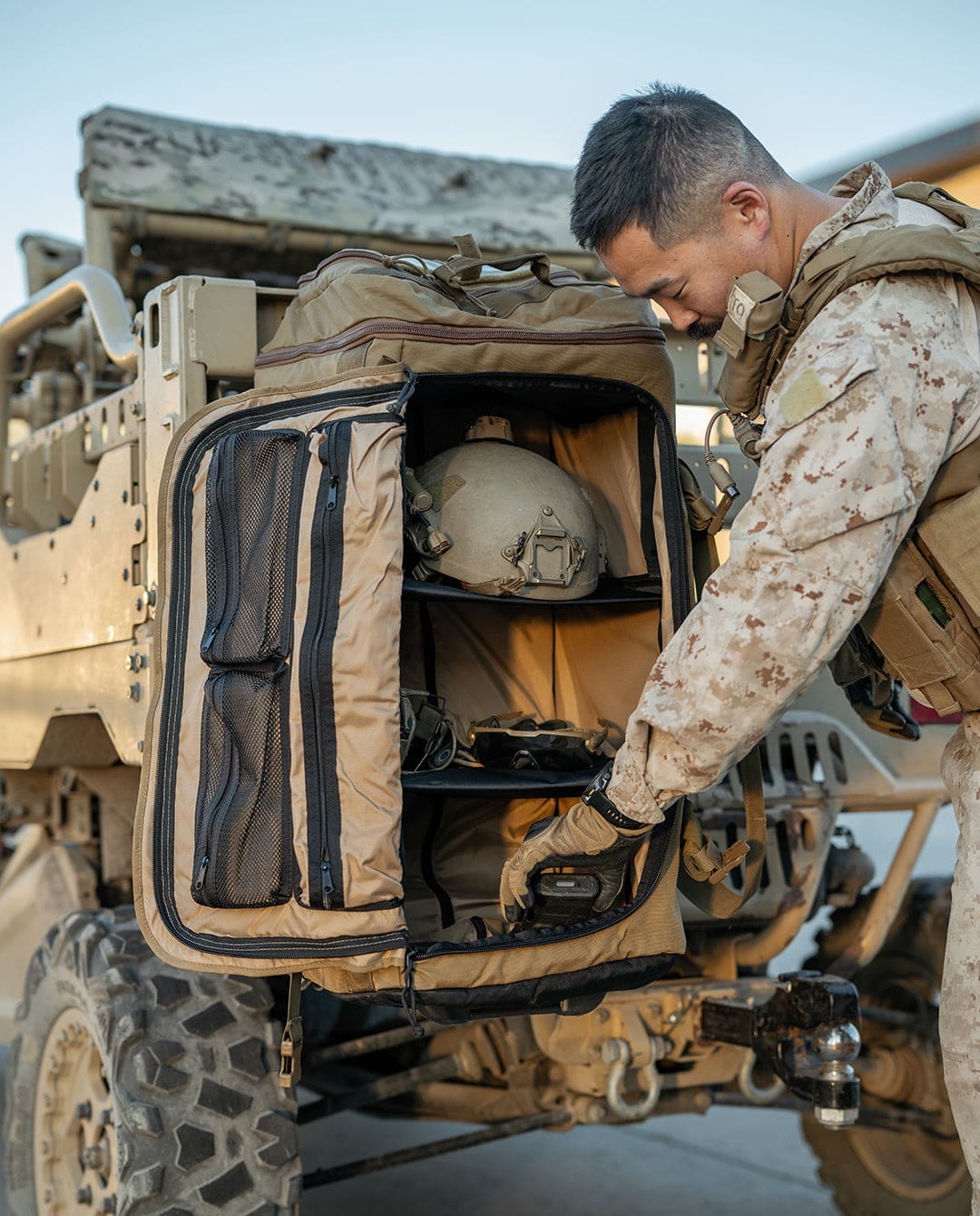
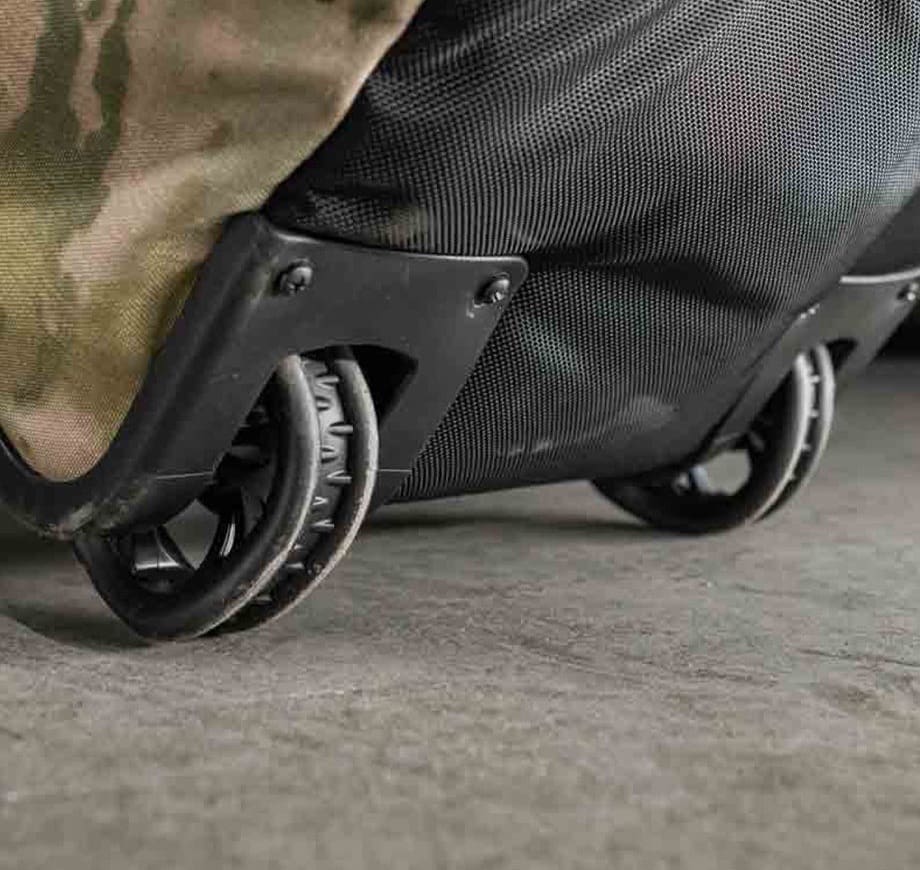
For many years, military freefall jumpers have placed their armor, load carriage, and packs within a jump bag to help streamline their bodies and avoid hazards from equipment being hung up while inside or exiting the aircraft. This can also help protect equipment on landing. One item that generally remains handy is the individual weapon. Ferro Concept took on the challenge to create a new bag which can be expanded, via a spiral zipper, as needed to contain the jumper’a individual equipment.

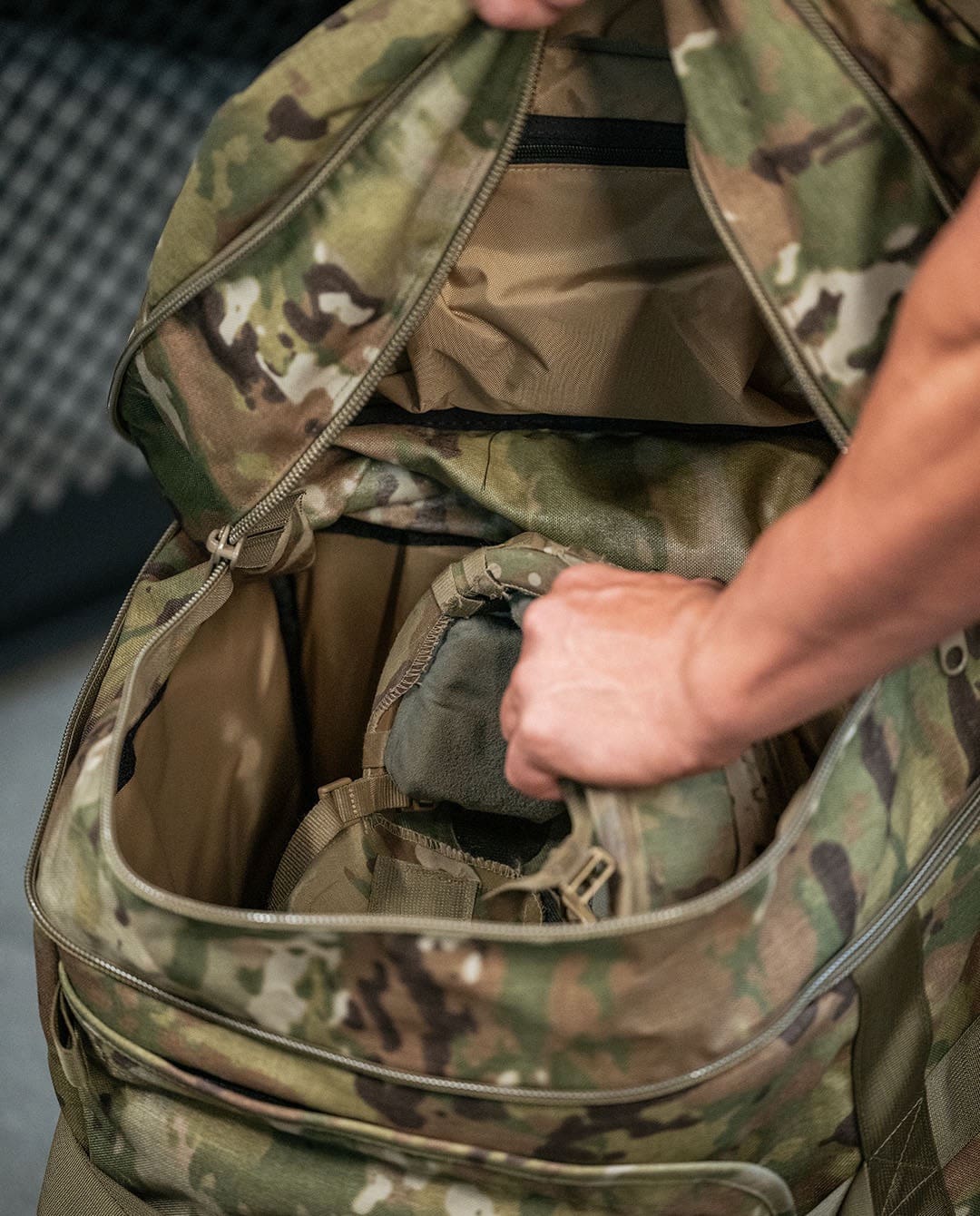
As you can see, the interior is quite large and has ample space for the individual’s vest and pack. The foam is not used operationally but rather to maintain the form of the bag while empty for exhibition. Straps on the exterior allow the jumper to cinch the bag tight around the load.

Here you can see how the jumper’s weapon attaches to the Jump Bag. It can quickly be removed and placed into action.

It attaches to the Equipment D Ring via snap shackles (Pelican Clips).

Once on terra firma, the Jump Bag will contain the parachute and harness as well as any other air items for either turn-in or caching prior to transitioning to overland movement. It incorporates shoulder straps.

I’ll wrap this up by pointing out that the product’s name indicates there are other sizes in the works and we’ll cover those once they are available.

ferroconcepts.com

Mystery Ranch Announces Carry Forward Line at SHOT Show 26

February 3rd, 2026

As the long-standing leader in military load carriage, MYSTERY RANCH designs and builds packs for the mission and they haven’t stopped.

At SHOT Show, the brand introduced Carry Forward, a collection that reflects an important and intentional evolution but remains rooted in the brand’s core. Rather than a departure from MYSTERY RANCH’s military DNA, Carry Fordward is an extension of it.

The Carry Forward collection exists because proven designs don’t lose relevance when the uniform comes off. You’ll see some familiar silhouettes, styles that have been trusted by mission users for years. Some will exhibit expanded color offerings while other designs have been refined for this new role. All feature a common thread; these are the packs MYSTERY RANCH believes in enough to keep building, supporting, and evolving.

Two products in particular stood out.

The Blitz 30 returns with redesign, shifting away from overt external PALS webbing toward a sleeker exterior. Modularity hasn’t been removed, it’s been moved inside. Internal PALS and hook-and-loop fields allow users to configure their load without advertising it, a smart update that reflects how many people actually use these packs today.

The newest addition is the Rip Ruck 24, built around the same proven Rip-Zip opening that made the original successful. What’s changed is restraint. Cleaner lines, simplified external pocketing, and a more streamlined profile make it a quieter, more refined version of a pack that already worked.

The Carry Forward collection isn’t about chasing trends or compromising capability. It’s about recognizing that the best designs don’t need to be reinvented, just respected, refined, and carried into what comes next.

See the entire line at www.mysteryranch.com/Packs/Everyday-Carry/New.

Emerging Technology and Irregular Warfare: Launching a New Focus Area

February 3rd, 2026

Technology Is Redefining Irregular Warfare. Here’s What That Means

There’s no agreed-upon playbook for emerging technology in the gray zone, and no consensus on what’s next. Experts debate competing timelines. The policy community commissions studies that become outdated before publication. And those working in these environments face split-second decisions that involve technologies that didn’t exist in doctrine, dilemmas that weren’t in ethics training, and environments where old assumptions no longer apply. What’s more, for every strategic advantage a new technology offers—whether in the realm of artificial intelligence (AI), autonomous systems, cyber and electronic warfare, crypto, cognitive warfare, biotech, etc.—it also introduces new risks that we don’t always see coming.

By the time institutions have done the analysis, calculated the risks, and agreed on how these technologies have changed irregular warfare and how to respond, the operating environment is already different. It can take decades for defense organizations to change and adapt. Technology evolves in months. The gap is already wide, and it’s only growing. The result is a dangerous reality in which practitioners are forced to make irreversible decisions without clear guidance, but with high-stakes consequences that may not even be fully understood until it is too late.

We can’t close that gap with studies and strategies alone. We need to connect the people closest to the challenges and build a community that learns faster than adversaries adapt.

That’s why the Irregular Warfare Initiative is launching a new focus area: the Emerging Technology and Irregular Warfare Focus Area.

What sets this effort apart is both the challenges we are tackling and the people we are engaging. We intend to take seriously the strategic and operational tensions that emerge as new technologies are adopted and embedded in irregular warfare. And we will bring together communities that don’t always talk to each other to grapple with those tensions collectively.

The Challenges We Are Tackling

Technology in irregular warfare creates genuine tensions between competing priorities that aren’t easily resolved. At the heart of these tensions are questions about how to maximize operational advantages while managing expanding risks, and who gets to determine those tradeoffs. While individual technologies introduce distinct risks and benefits, our focus is not on the tools themselves, but on the tensions they generate, and how those tensions play out across different contexts and stakeholders and in exploring new directions and fresh proposals for navigating them. Some of these core dilemmas include:

Decisionmaking & Accountability – Technology enables faster, better-informed and more precise decisions, but only if our existing decisionmaking processes evolve in parallel. But by reshaping decision dynamics in decentralized and ambiguous environments, these tools also introduce new risks related to accountability, civilian harm, and the ability to maintain political control and influence.

Diffusion & Escalation – Dual-use, low-cost, high-impact technologies enable individuals, nonstate actors, and terrorist networks to adapt lethal irregular warfare tactics, evade traditional financial intelligence, and exploit deniability. At the same time, their diffusion accelerates escalation dynamics and demands new concepts and approaches to restraint and control in gray zone conflicts.

Legitimacy & Effectiveness – As artificial intelligence, autonomous systems, and cyber capabilities outpace laws and regulations, tensions arise between operational effectiveness and maintaining public legitimacy, especially when confronting adversaries that reject these constraints. In operating environments where information moves fast and decisions can’t wait, both effectiveness and legitimacy require new approaches to measuring impact, managing risk, and adapting in real-time.

Influence & Trust – Emerging technologies offer new tools for enhancing diplomatic and humanitarian effectiveness, critical components of securing influence among populations in irregular warfare. In contested environments, however, adversaries can exploit these same technologies to undermine public trust through surveillance, algorithmic bias, misinformation, and dependency creation.

The People We Are Engaging

This platform is built for and by everyone working across irregular warfare: government, military, civil society, private sector, humanitarians, academics, development actors, partners, and local communities. We believe experience matters as much as credentials. Ground truth matters as much as theory. And the hard lessons learned in one theater should inform decisions in another, in real time, not years later through formal doctrine updates. Most importantly, we believe the people navigating these challenges can’t wait for perfect answers. They need better options now, founded on clear principles to guide decisions under uncertainty.

How We Work

As we tackle these challenges, this Focus Area will be guided by the following principles:

Problem-driven – Our starting point will be the problems practitioners face on the ground, not technologies in search of applications. We want to identify what works, what doesn’t, and what principles can guide decisions when perfect information doesn’t exist. When doctrine exists but practitioners aren’t using it, we want to figure out why and identify solutions.

Whole-of-Government and Whole-of-Society Perspectives – Technology in irregular warfare doesn’t just affect military operations. It reshapes societies, influences populations, and creates dependencies that outlast any single intervention. These issues demand a coordinated response across the government and a systems approach that recognizes how technology’s societal impacts might reinforce or undermine strategic objectives over the long term.

Future-focused – What’s important in confronting the challenges above is not merely analyzing last year’s conflict, but remaining focused on what’s coming next. Responding adaptively to the emerging technologies, tactics, and dilemmas that will shape tomorrow’s irregular warfare environment will ensure we are staying ahead of the problem, not playing catch-up.

Join the Conversation

As IWI develops this Focus Area going forward, we want to hear from you. Submit an article. Join us on a podcast. Send us an email at EmergingTech@irregularwarfare.org. Engage on social media where these conversations reach beyond traditional circles to developers, humanitarians, local partners, and others navigating the same technology dilemmas.

We’re interested in emerging issues where the problem hasn’t been clearly defined, where consensus is lacking, or where solutions remain elusive. We also want to bridge gaps where doctrine exists but isn’t being applied. Help us understand why and what needs to change. What matters is the quality of the argument, the evidence behind it, and the technology’s impact on irregular warfare, not whether it meets an arbitrary definition of “emerging.” Contributions will not be dismissed on the grounds that a technology is too established, not novel enough, or insufficiently disruptive.

Technology will continue reshaping societies and conflicts at an accelerating pace. The only question is whether we learn fast enough to stay ahead, or whether we’re perpetually reacting to problems that could have been anticipated.

Practitioners on the ground can’t wait for perfect answers. They need better options, clearer principles, and a community learning together in real time. That’s what we’re building. And we want you to help us build it.

February 2, 2026 by Kristina Kempkey, Jeffrey Szuchman

Kristina Kempkey is a senior leader with over two decades of experience working at the intersection of national security and foreign policy in high-risk environments. She has led and advised major efforts with USAID, the U.S. Department of Defense, and the United Nations, working alongside military, diplomatic, and civilian partners across Africa, Eastern Europe, and South Asia. Her work centers on applying emerging technologies to real-world security, stabilization, and institutional challenges. She brings a practitioner’s understanding of interagency operations, coalition building, and decision-making under uncertainty. She has contributed to research with the Council on Foreign Relations and West Point on national security and military strategy. As a Fellow at the ML Alignment and Theory Scholars (MATS), Future Impact Group (FIG), 21st Century India Center at UC San Diego, and the Center for AI and Digital Policy (CAIDP), Kristina informs practical policy recommendations and operational insights for governments and security institutions navigating the risks and opportunities of advanced AI.

Jeffrey Szuchman’s work examines how emerging technologies shape governance and security in fragile and conflict-affected settings. He has held leadership roles at USAID in Washington, DC and in Africa, including as Deputy Director for Democratic Governance, Peace & Security in Kenya, where he managed multi-million dollar grants in security, governance, and peacebuilding, and advised on integrating digital safeguards and responsible AI principles into national strategies. He has also led teams at USAID in Liberia and in Washington, DC, where he served as Acting Director of Policy, leading agency-wide strategic planning and directing cross-functional teams on issues ranging from digital transformation, stabilization, and conflict prevention. Prior to USAID, he was a Professor of Global Studies at Zayed University in Abu Dhabi. He holds a PhD and MA in Near Eastern Languages and Cultures from UCLA.

Main Image generated by ChatGPT using DALL·E, OpenAI (January 2026).

The views expressed are those of the authors and do not reflect the official position of the Irregular Warfare Initiative, Princeton University’s Empirical Studies of Conflict Project, the Modern War Institute at West Point, or the United States Government.

Army Security Cooperation Group-South: First of Its Kind Stands Up in Georgia

February 3rd, 2026

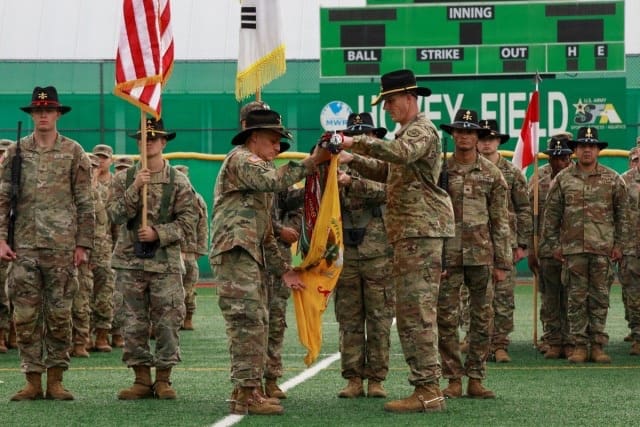
FORT BENNING, Ga. – On January 27, 2026, the Army Security Cooperation Group – South (ASCG-S) conducted a small ceremony on Kelley Hill, Fort Benning, Georgia to commemorate its ongoing transformation. ASCG-S, formerly 1st Security Force Assistance Brigade (1st SFAB), has become central to security cooperation in Panama, through its assumption of the Joint Security Cooperation Group-Panama (JSCG-P) and the combined Jungle Operations Training Center (JOTC) missions.

The ceremony was presided over by Col. Keith W. Benedict and Cmd. Sgt. Maj. Pedro Chavez, the command team for the ASCG-S. During the ceremony – coinciding with the furling of the colors and near-term departure of two organic battalions and one National Guard battalion from 54th SFAB. Col. Benedict reflected on 1st SFAB’s legacy and how it’s accomplishments and achievements will have long-lasting effects on the U.S. Army and our regional partners. Those bound for Panama then donned their jungle boonie headgear, and all donned the U.S. Army South’s 6th Army patch.

1st Security Force Assistance Brigade was activated in October 2017 to fill the growing requirement for Advisors for Afghan security forces, alleviating the existing practice of pulling leaders from their formations to help Afghan units. 1st SFAB conducted one deployment to southwest Asia, where Cmd. Sgt. Maj. Timothy Bolyard, the senior enlisted advisor of 3rd Squadron, 1st SFAB made the ultimate sacrifice. After the Afghanistan tour, 1st SFAB became regionally aligned to the Southern Command area of operations, where they conducted security force assistance with Colombia, Argentina, Panama, and Honduras, among other partners.

The Army Security Cooperation Group – South is a unique unit within the Army, that falls under the newly-established United States Western Hemisphere Command (USAWHC), leading efforts to deepen and widen interoperability with Panamanian partners on strategic terrain within the 2025 National Security Strategy’s priority region. “Our soldiers are excited to build upon their experience working in Panama to establish a digitized training environment and work with our partners,” states Col. Benedict, “to test and evaluate our warfighting capabilities in one of the most challenging jungle environs in the world.”

Under the new force restructure, ASCG-S has assumed responsibility for JSCG-P, which is working with the government of Panama to increase cooperation efforts between the U.S. Military and Panamanian security forces. JSCG-P is also crucial to the staging and reception of all U.S. military personnel coming to Panama to learn from partners and to test their mettle. “We are actively seeking jungle expertise and look forward to units across the joint force and the international community joining us this summer for Panamax 2026,” CSM Chavez states, “I assure you, this environment isn’t for the timid or entitled.”

JSCG-P is working with Panamanian partners to re-invigorate a combined JOTC at Aeronaval Base Cristobal Colon (formerly Fort Sherman). Panamanian security forces have run a unilateral course like the U.S. Army-run, combined course that existed for Panama for nearly 40 years until 1999. Now, once again JOTC students and cadre from both U.S. and Panamanian security forces convene in the “Green Hell.” The current course is 18 days and goes over primitive fire and shelter training followed by tracking and patrol exercises that test the students’ resilience and perseverance.

The activation of the ASCG-S is yet another visible step in the Army and U.S. military’s ongoing effort to revitalize security in the western hemisphere and with the regional partners therein. The Army Security Cooperation Group-South is excited to evolve into a premier jungle force capable of enabling training and readiness for and looking for units to train in this environment and individual soldiers seeking opportunities to enter the triple-canopy arena.

MAJ Val Bryant

Draganfly Selected to Provide Draganfly Flex FPV Drones and Training to US Air Force Special Operations Command Units in Partnership with DelMar Aerospace

February 2nd, 2026

Tampa, Fla. —  February 2, 2026 — Draganfly Inc. (NASDAQ: DPRO; CSE: DPRO; FSE: 3U8A) (“Draganfly” or the “Company”), an award-winning developer of drone solutions, software, and robotics, today announced an award to provide Flex FPV Drones and Training to U.S. Air Force Special Operations Command units with partner DelMar Aerospace Corporation, a leading provider of advanced uncrewed aircraft systems (UAS) training, tactics, techniques, and procedures (TTPs), for U.S. Government customers. 

The partnership with DelMar brings together Draganfly’s operationally proven uncrewed platforms with DelMar Aerospace’s expertise in delivering cutting-edge, mission-relevant UAS instruction to Government operators. Initial training activities include First Person View (FPV) UAS instruction, with a comprehensive curriculum covering FPV assembly, repair, flight operations, advanced mission planning and execution. 

The award is to provide foundational FPV training with Draganfly Flex FPV Drones to U.S. Air Force Special Operations Command units. Training will take place at DelMar Aerospace’s Camp Pendleton UAS range training facility, a controlled environment purpose-built to support advanced instruction that replicates a range of battlefield scenarios. The first training cohort is scheduled to begin in mid-February. 

Draganfly’s Flex FPV serves as the modular backbone for future small UAS configurations, uniquely capable of meeting evolving Department of War operational requirements. The Flex FPV’s innovative design enables rapid transition across operating profiles, allowing a variety of flight characteristics and payload capacities to be deployed with a single unit. This adaptability enables widespread adoption via a common training and sustainment baseline while providing a unique and compelling value proposition to any tactical drone program.

 “Our shared focus is on readiness and combat capability,” said Cameron Chell, CEO of Draganfly. “Partnering with DelMar Aerospace helps ensure operators are training on systems and tactics designed for real-world conditions, with the Flex’s modularity and reliability required to adapt as missions and threats evolve.” 

DelMar Aerospace will lead instruction delivery, curriculum development, and standards alignment, ensuring training remains tactically relevant while compliant with U.S. Government contracting and security requirements. 

“This collaboration is about developing operators who are prepared to employ uncrewed systems effectively in demanding environments,” said Stanley Springer, DelMar Aerospace’s Chief Operating Officer. “Our focus is disciplined training grounded in combat-proven TTPs and operational realism.” 

This announcement reflects ongoing work in support of U.S. Government programs. Specific operational details are not being disclosed.