FirstSpear TV

Real Plastic Heroes – GWOT Set #1

December 14th, 2025

Remember the plastic soldiers you used to portray epic battles as a kid? Real Plastic Heroes has opened pre-orders for their first set of Global War On Terror figures.

Based on real US veterans who served in combat during the Global War on Terror (2001 – 2021) these are slightly larger and more detailed than the toys you grew up playing with, these plastic warfighters are ready to defend against all enemies.  Sculpted by the legendary artist, Tim Barry, each Real Plastic Hero is equipped with authentic weaponry and kit.

Choose between Green and Tan the figures come from four out of the six branches of the US military.

Figures stand up to 2.75 tall and are approximately 1:24 scale (70mm) and designed and manufactured in the USA.

Your purchase directly supports each Real Plastic Heroes veteran with proceeds.  Additionally, you’re supporting efforts to revitalize manufacturing in the USA and driving growth for Real Plastic Heroes LLC, a family-owned business based in Texas.

8 poses, 32 figures per set

realplasticheroes.com/USAGWOT1

Secretary of the Army Visits the Army’s Center of Excellence for Guns and Ammunition

December 14th, 2025

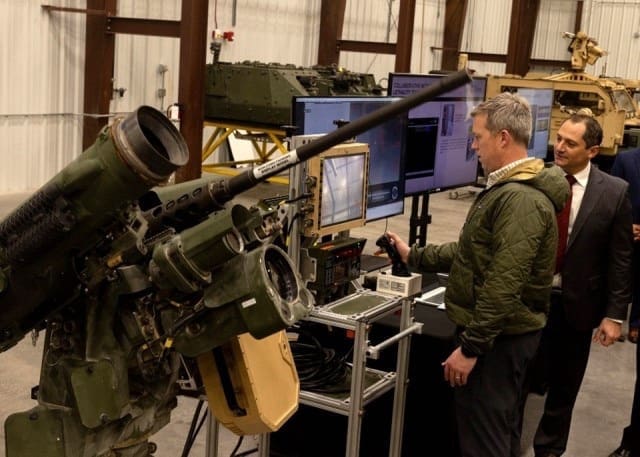
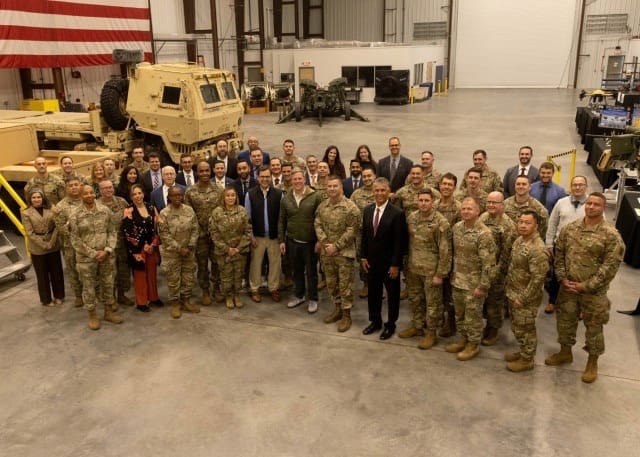
PICATINNY ARSENAL, NJ — Secretary of the Army Dan Driscoll, Senior Official Performing the Duties of the Deputy Under Secretary of the Army David Fitzgerald, and U.S. Representative Thomas Kean Jr. visited Picatinny Arsenal on November 6 to see first-hand the innovative work being by the Joint Program Executive Office for Armaments and Ammunition (JPEO A&A), U.S. Army Combat Capabilities Development Command (DEVCOM) Armaments Center, and Office of the Project Manager Soldier Lethality as they strengthen the Arsenal of Freedom by increasing industrial capacity and bringing advanced technologies and improved lethality to the Warfighter. The visit was Driscoll’s first to Picatinny, which is designated as the Department of War’s Joint Center of Excellence for Guns and Ammunition.

The visit began with a hands-on demonstration of the lethality of the 6.8mm ammunition for the M7 Next Gen Squad Weapon. The rounds will be produced at the Lake City Army Ammunition Plant outside St. Louis in an interim capacity until completion of a new, state-of-the-art facility that is currently under construction. Sig Sauer is also producing the new rounds as a second source in Jacksonville, Arkansas. DEVCOM and JPEO engineers explained to Secretary Driscoll the various 6.8mm technical innovations and the new ammunition’s performance specs as compared to currently fielded 5.56mm and 7.62mm capabilities.

Developed collaboratively by the JPEO A&A, the DEVCOM Armaments Center, the Army Research Laboratory, the 6.8mm family of ammunition is specifically engineered to maximize the performance of the M7 Rifle and the M250 Automatic Rifle. When fired through these Next Generation Squad Weapons, 6.8mm rounds deliver increased range, improved accuracy, and enhanced lethality, ensuring Soldiers maintain overmatch on the battlefield.

Driscoll attended a working lunch where Maj. Gen. John T. Reim, Joint Program Executive Officer for Armaments & Ammunition and Picatinny’s Commanding General, and other senior leaders highlighted the diverse capabilities and critical missions of the major commands and tenant organizations at the installation, underscoring Picatinny’s enduring role in supporting joint force operations and sustaining combat power.

“I have had the privilege of doing nine ribbon-cutting ceremonies here in the past two years,” Reim said. “We are bringing new capabilities online. We are replacing legacy production methods and working closely with industry partners to develop modular, flexible production capabilities that can support a surge while maintaining efficiencies during downtimes.”

The visit continued with a bang as Driscoll witnessed a live fire exercise featuring the Purpose Built Attritable System (PBAS) and a TRV-150 drone dropping smoke and a M69 training grenade onto a target simulating a small group of enemy soldiers with a vehicle. This showed off one of DEVCOM’s latest innovations, the Picatinny Common Lethality Integration Kit or Picatinny CLIK, which defines the physical interface (mechanical attachment), electrical interface (power, network, messaging) and safety critical architecture between the ground station control and an unmanned aerial system (UAS) with lethal payloads, eliminating unique integration methods and costly acquisition conditions created by “vendor lock.”

“This ensures a rigorous, yet flexible, process for evaluating, qualifying, procuring, and ultimately fielding safe and effective weaponized UAS payloads to the joint force,” said acting Executive Director of the Armaments Center’s Weapons and Software Engineering Center, Bhavanjot Singh. “When we solicit industry for a capability, we will be providing Picatinny CLIK technical data so industry can focus on providing lethal capabilities without worrying nearly as much about integration.”

Following the live fire demonstration, Driscoll was shown more of the unique capabilities developed at Picatinny Arsenal by the DEVCOM Armaments Center and the Project Manager offices under JPEO A&A covering lethal UAS, counter-UAS munitions, advanced artillery, and next-gen energetics.

One highlighted counter-UAS capability was the airburst proximity fuze technology that was initially fielded in 30mm XM1211 High Explosive Proximity (HEP) for M-LIDS, providing the first medium caliber counter-UAS capability to theater. Leveraging the capability, the proximity fuze technology was scaled down to a 25mm form factor for the XM1228 Bradley Aerial Defeat Ground Enhanced Round (BADGER). BADGER provides organic C-UAS capabilities to the M2 Bradley Infantry Fighting Vehicle with no additional vehicle or weapon modification required.

“BADGER is a great example of how the Army’s acquisition enterprise is moving toward quicker returns by leveraging new ways of doing business, quickly innovating at the round, and leveraging existing weapons platforms to enhance the lethality of our Warfighters,” said Reim.

Another counter-UAS capability developed at Picatinny Arsenal and presented to Driscoll was the next generation Common Remotely Operated Weapon Station (CROWS). The implementation of a C-UAS capability for platforms with current or future CROWS allows for leveraging of existing 30mm and 40mm weapon systems and proximity-fuze ammunition, providing a low-cost kinetic C-UAS solution across multiple platforms.

Artillery innovations as part of the Army’s Long Range Prevision Fires line of effort are another critical capability area at Picatinny that was presented to Driscoll.

The M982 Excalibur is a 155mm Global Positioning System (GPS) guided precision cannon artillery munition compatible with 39-caliber, 52-caliber and 58-caliber artillery systems with reach distances of up to 40 kilometers, 50 kilometers and 70 kilometers, respectively. Excalibur was co-developed by Raytheon and BAE Systems Bofors and is currently in production to deliver projectiles to the US Army. The projectile is being evaluated for system upgrades to improve performance in GPS-jammed environments leveraging lessons learned and telemetry data from Ukraine.

The Extended Range Artillery Projectile (ERAP), also known as the XM1155 program, is a cutting-edge system of systems designed to deliver unprecedented lethality and range overmatch for 155mm artillery weapon systems. With ranges exceeding more than double those of legacy artillery cannons, the ERAP will be compatible with both current and future Army mobile howitzer systems. The ERAP program is being executed through the innovative Middle Tier of Acquisition pathway, which leverages both traditional and non-traditional suppliers. This approach fosters competition among industry partners and accelerates the prototyping of mature technologies, ensuring that hardware is delivered to Soldiers faster and more effectively.

The Modular Artillery for Combat Effectiveness (MACE) program was discussed, which is an effort to focus on making conventional artillery more manufacturable and modular. Enhanced manufacturability will reduce dependency on niche, government only production processes and leverage commercial production capabilities and capacity.

Following the tours and demonstrations, Driscoll presented coins to the various organizations.

The Secretary of the Army’s visit to Picatinny underscored the installation’s vital role in sustaining the force and arming the Army of the future. As the Army continues to modernize and adapt to evolving global demands, the various commands at Picatinny Arsenal remain a pillar of readiness – delivering the capabilities, expertise, and innovation that ensures our Warfighters and allies are equipped to succeed in any environment.

By Michael Chambers

Henry Repeating Arms Announced as Supporting Sponsor for Industry Day at the Range 2026

December 13th, 2025

BOULDER CITY, Nev. – December 9, 2025 – SHOT Show® Industry Day at the Range, the highly anticipated hands-on event held annually the day before SHOT Show®, is thrilled to announce Henry Repeating Arms as a Supporting Sponsor of the 21st annual event, taking place January 19, 2026, at the Boulder Rifle and Pistol Club in Boulder City, Nevada.

Henry Repeating Arms is one of America’s leading firearms manufacturers and the world leader in the lever action category. The company is dedicated to producing high-quality rifles, shotguns and revolvers that cater to enthusiasts, hunters and sportsmen. Henry Repeating Arms continues to be a symbol of American craftsmanship and innovation in the firearms industry.

“Industry Day at the Range is where our year truly begins, and we look forward to seeing old friends, making new ones and showing off what we’ve been working on,” said Daniel Clayton-Luce, Vice President of Communications. “It’s the first opportunity for anyone outside of our walls to get hands-on with our new-for-2026 models, and trust me, there’s a lot.”  

Industry Day offers an unparalleled opportunity for exhibitors to introduce new products, engage with top-tier media and influencers and create direct connections with SHOT Show attendees in a hands-on environment. This exclusive event provides early momentum that extends well into the SHOT Show itself, ensuring maximum exposure for brands ahead of the main event.

“We are excited to have Henry Repeating Arms join us as a Supporting Sponsor for Industry Day at the Range 2026,” said Kelsey Puryear, Industry Day at the Range co-owner. “Its legacy of producing high-quality lever action rifles and commitment to American manufacturing make it an ideal partner for an event that highlights the best our industry has to offer.”

As a Supporting Sponsor, Henry Repeating Arms reinforces its position as a leader in American firearms manufacturing. Its participation highlights the brand’s dedication to fostering relationships with influential voices and key decision-makers in the firearms industry.

Supported by the National Shooting Sports Foundation as title sponsor through 2028, Industry Day at the Range remains the only official range event associated with the SHOT Show. Exhibitor space is limited, and early registration is strongly encouraged.

Exhibitor registration will close on December 10, 2025, and limited spaces are available. New exhibitors can register online now to secure their space. Sponsorship information is also available online. For additional details and answers to frequently asked questions, please visit the event website.

For more information about the 2026 SHOT Show Industry Day at the Range visit ShotShowRangeDay.com

Media Contact: Kelsey Puryear, Industry Day at the Range Co-Owner & Event Manager

Email: Kelsey@shotshowrangeday.com

US Army Expands Program that Transforms How Soldiers Prepare for Combat

December 13th, 2025

Warfighting is at the forefront of everything we do in the Army, and over the past five years, the culture of human performance has evolved to ensure that Soldiers are prepared to fight and win our nation’s wars.

Holistic Health and Fitness (H2F) has transformed the way soldiers train for future battles. It has shifted away from a one-size-fits-all model for human performance to a more individualized approach, tailored to preparing Soldiers to win on the modern battlefield and return home healthy. This revolutionary shift is supported by teams of subject matter experts, embedded within the Brigade footprint, that work directly for the Brigade Commander to meet the specific units’ Mission Essential Task List (METL).
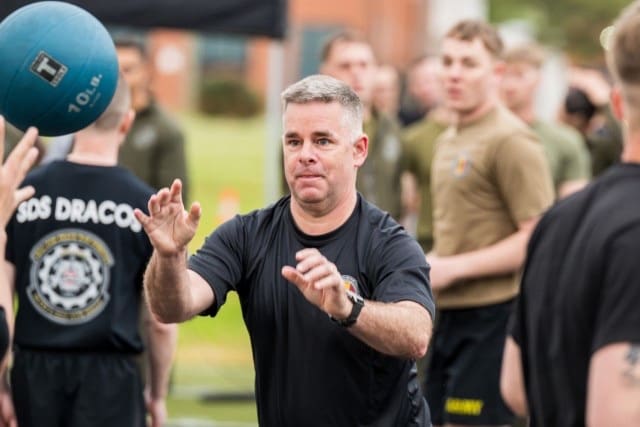
“In a fiscally restrained time, leaders within the Department of War recognize the direct, proven, and significant impact our H2F teams have on our Soldiers’ warfighting ability and as a result have excluded the H2F civilian professionals from the civilian hiring freeze, supported rapidly expansion of the program, and the procurement of the first human performance optimization platform across the Department”, said Lt. Gen. David Francis, Commander, U.S. Army Center for Initial Military Training, the Army’s proponent for H2F. “The H2F System has the full support and backing of both the Secretary of War and the Secretary of the Army as we have worked directly to inform them on the positive return on investment data that our H2F teams are having on our warfighting abilities”.

Initially planned and resourced for 111 Active Duty Brigades, Army Senior Leaders announced after reviewing the initial Return on Investment (ROI) data that H2F Performance Teams (HPTs) would be resourced to every unit across the Army.

ROI data indicates that, although it comes with an initial heavy price tag, H2F is paying for itself year over year by getting our warfighters back into the fight, both fitter and faster. Data currently being peer-reviewed indicates that for every dollar spent on H2F, $8.15 in cost avoidance and readiness gains are realized. The United States Army Research Institute of Environmental Medicine (USARIEM) also conducted independent research, consisting of over 30 million Soldier observations from Fiscal Year 2019-2024, and found that if H2F HPTs were rolled out Army-wide, it would have added 1,080 deployable Soldiers to the fighting force. These 1,080 Soldiers equate to adding over ten company sized elements of combat power back into the fight.

“The Army is rapidly transforming to ensure our Soldiers are prepared to fight and win our nation’s wars”, said Col. John “Jay” Morgan, H2F Director. “Through the H2F HPTs, across our Army, we are equipping our warfighters with human performance subject matter experts who ensure, when called, our Soldiers are prepared to fight, win, and dominate on the modern battlefield”.

By Fiscal Year 2029, the Army will have fielded 129 Active-Duty Brigades, four states throughout the Army National Guard, and two Army Reserve Commands will be equipped with HPTs. A key distinction between how the Active Duty and Reserve Component HPTs will operate, due to their distinct differences, is the level of support they will provide. Reserve Component HPTs will work directly for their Adjutant General or major Army Reserve Command, rather than a Brigade Commander, to meet their units’ METL and resolve unique challenges these Soldiers face, balancing their civilian and military careers that Active-Duty units do not face. To support geo-dispersed and smaller Brigade sized elements 59 H2F Area Support Teams (H2FAST) will be fielded and directly work for their Installation Senior Mission Commander.

“H2F is a Commanders program, Commanders need to know these HPTs work for them”, said Gen. James Mingus, Vice Chief of Staff of the Army. “These HPTs are filled with subject matter experts who treat our warfighters like professional athletes. Having this level of expertise within these teams, like what Division 1 schools have, helps the Command team best prepare Soldiers for combat”.
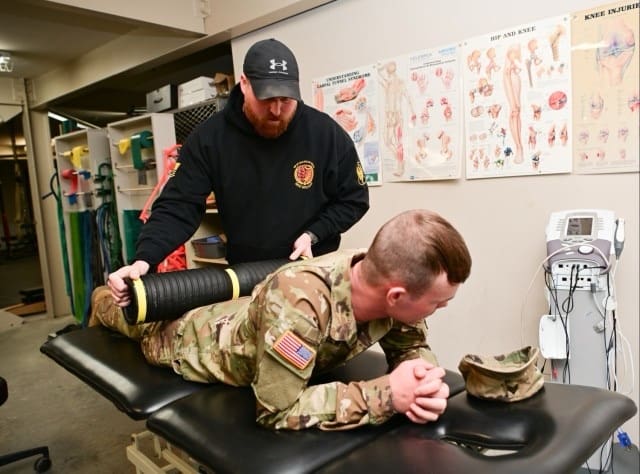
Throughout the rapid expansion process, the Army has navigated a challenging hiring environment. The Secretary of War, Honorable Pete Hegseth, exempted all H2F positions from the civilian hiring freeze to ensure only the best and brightest physical and occupational therapists and registered dietitians were on board our HPTs. Further, in September of this year, based on strong positive feedback from commanders, the Vice Chief of Staff of the Army approved a change to the composition of the H2F Performance Teams (HPT) and H2F Area Support Teams (H2FAST) to include 4 Athletic Trainers (AT) per team through FY29.

To streamline the expansion of H2F expertise across the force, the Army has collaborated directly with the Department of War to develop the requirements for fielding the first human performance optimization platform across the Department. This software solution, designed for the Army, is called the H2F Management System (H2FMS) and serves as the software backbone of the H2F System, providing Soldiers, leaders, and HPT staff with data-driven insights that are typically only found within Special Operations or professional athletics.

“H2FMS will empower HPTs across the Total Army to effectively measure, analyze, and improve Soldier performance and overall combat readiness”, said Lt. Col. Chance Smith, Operations Research and Systems Analyst, U.S. Army Center for Initial Military Training. “Our partners at Program Executive Office- Soldier have provided valuable insights into building out requirements, streamlining the procurement process, and ensuring that H2FMS is designed to impact the warfighter positively”.

Soldier Performance Readiness Centers, or SPRCs, are the home to H2F human performance teams that deliver comprehensive, immersive, and integrative training experiences for soldiers. In partnership with the U.S. Army Corps of Engineers, Installation Management Command (IMCOM), and the Assistant Secretary of the Army for Installations, Energy and Environment (IE&E) Army Senior Leaders approved plans to improve 67 facilities this fiscal year and to complete four designs for SPRC Experiment (SPRC-X), which utilize unconventional construction where new construction is needed.

Paramount to the Army’s investments across the H2F System in people, facilties, data management, and equipment is the buy-in from operational non-commissioned officers (NCOs) who have an enduring and foundational role in unit training. The Army recently concluded the first pilot of the new Skills Qualification Identifier (SQI) for the H2F Advisor. This SQI, only eligible for NCOs, is the Army’s latest investment in empowering the NCO Corps to serve as the “Master Gunner” for human performance on a Brigade or Battalion staff.
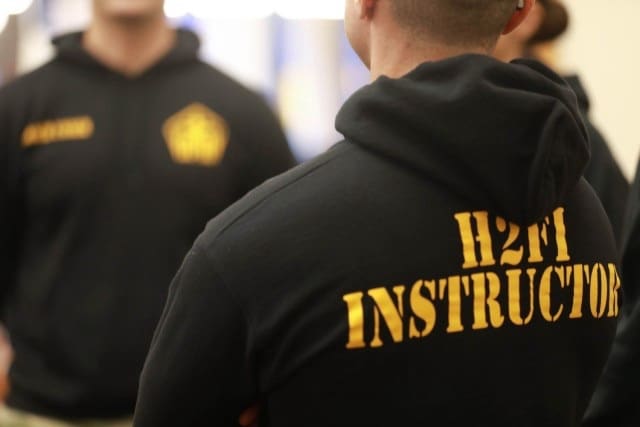
“The H2F Advisor SQI empowers the NCO Corps to directly advise Commanders on the ways best to incorporate human performance-oriented, battle-focused training into their units’ long-term training calendar”, said Sgt. Maj. Jeremiah Richards, H2F Senior Enlisted Advisor. “H2F Advisors serve as the bridge between the HPTs and the H2F Integrators below the Brigade level to synchronize H2F implementation throughout”.

As the Army expands H2F across the force, it has also expanded its scope of responsibilities to include functional proponency for the Pregnancy and Postpartum Performance Training (P3T) program. Formerly known as Pregnancy and Postpartum Physical Training, the P3T team is rapidly reviewing and revising educational content and training P3T leaders to implement effective physical training and education to support perinatal Soldiers return to the operational force fitter. By incorporating the most current evidence across the five domains of readiness, the revised P3T program is seeing similar ROI as the H2F System.

In a recent U.S. Army Center for Initial Military Training questionnaire, 75% of respondents indicated that participating in a unit-run P3T course improved their Army Fitness Test (AFT) score. Preliminary data demonstrates that soldiers who participated in P3T saw an average increase of 50 points in AFT scores before returning to their units.

“Roughly 10,000 Soldiers across the total Army give birth to a child every year”, said Maj. Stephanie Meno, H2F Nutrition and P3T lead. “The most profound shift in the P3T program is the inclusion of all give domains of H2F, pelvic-health education, and the most current evidence for maintaining optimal health and fitness in a perinatal population. Soldiers who participate in P3T throughout pregnancy and postpartum are returning to their formations fitter, faster, and stronger than before becoming pregnant”.

H2F will be hosting their annual Symposium, from 13-14 May, where the Directorate announces ROI metrics for the currently fielded H2F teams, have Army Senior Leaders speak on the program, and highlight the best HPTs across the Total Army.

Register for the Symposium at: www.militaryexpos.com/h2f

By Hunter Rhoades, U.S. Army Center for Initial Military Training

A Paradigm Shift: Navy Establishes First Information Warfare Squadron

December 13th, 2025

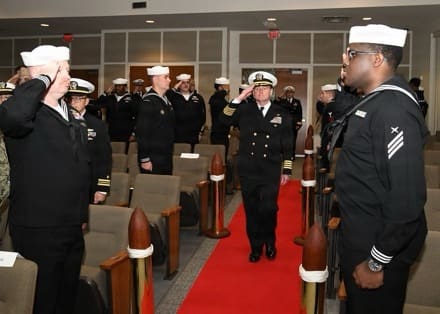
NORFOLK, Va. – Information Warfare Squadron (IWRON) Two, a first-of-its-kind unit designed to operationalize Information Warfare (IW) capabilities and provide decisive decision advantage to Carrier Strike Group Commanders, was established, Dec. 5.

This command is being stood up as part of a 48-month pilot program that received unanimous approval at the Fleet Commanders’ Readiness Council (FCRC) in June of 2025. The FCRC is a forum where top Navy leaders develop integrated solutions to Fleet-wide issues necessary to support warfighting, mission effectiveness, and sustain readiness wholeness. This pilot program will be a period of learning, adaptation, and innovation, with a focus on improving readiness, refining doctrine, evaluating the effectiveness of integrated IW capabilities and increasing lethality across the Carrier Strike Group.

“This isn’t just another ceremony, this is a paradigm shift in how we fight and win in the 21st century,” said Vice Adm. Mike Vernazza, commander, Naval Information Forces. “For too long, Information Warfare has been a collection of vital but often disparate capabilities. Today, we change that. Today, we forge a unified force, a sharpened spear, ready to deliver the necessary decisive decision advantage to our Carrier Strike Group Commanders in any environment.”

The establishment of IWRON Two addresses the increasing complexity and sophistication of global threats, which actively seek to exploit vulnerabilities from seabed to space. The IWRON construct, modeled after the successes of Air Wings and Destroyer Squadrons, streamlines the chain of command, aligns warfare commander authorities, and consolidates responsibilities under a single accountable commander, thereby enhancing speed, agility, and decisive action.

“The IWRON construct represents a bold step forward,” said Vernazza. “We are integrating and employing advanced IW capabilities and delivering them as a unified force across the spectrum of conflict. We are employing IW warfighting effects in a way that has never been demonstrated before. To get to outcomes we haven’t had, we need to do things we haven’t done…this is one of them.”

IWRON TWO brings together talent from across the IW community, including the Carrier Strike Group staff, the Strike Group Oceanography Team, the Fleet Intelligence Detachment DC, the Navy Cyber Defense Operations Command, the Navy Information Operations Command, and the Naval Information Warfare Training Group.

CAPT Jon O’Connor assumed command of IWRON Two.

“IWRON-2 will not only meet, but exceed the standards of excellence because we must. Our mission demands it. We are here to strengthen the readiness, lethality, and survivability of our Carrier Strike Groups by integrating our advanced IW capabilities,” said O’Connor. “This is about warfighting, pure and simple.

The Sailors who comprise the initial cadre of IWRON Two were recognized for their pivotal part of this new command.

“Your willingness to embrace this challenge, to be pioneers in this new frontier of warfare, is a testament to your dedication and your commitment to our Navy. You are the lifeblood and decisive warfighting advantage of our Navy. Your work here will pave the way for future generations of Information Warfare professionals for years to come.” said Vernazza.

IWRON Two will serve as the pilot squadron on the East Coast, with another squadron being established on the West Coast in 2026.

The establishment of Information Warfare Squadron Two marks a crucial step forward in ensuring the U.S. Navy remains the premier warfighting force – ready, capable, and unmatched.

NAVIFOR’s mission is to generate, directly and through our leadership of the IW Enterprise, agile and technically superior manned, trained, equipped, and certified combat-ready IW forces to ensure our Navy will decisively DETER, COMPETE, and WIN.

For more information on NAVIFOR, visit the command Facebook page at www.facebook.com/NavalInformationForces or the public web page at www.navifor.usff.navy.mil.

Via Naval Information Forces

Terrain 365 Invictus-BL

December 13th, 2025

Latest Invictus with Unique Button Lock

New for December 2025, Terrain 365™releases the newest variant of their Invictus folder design featuring a unique, patentedbutton lock integrated into the folder pivot. Other highlights include their technical, rustproof X edge-holding, Terravantium™alloy blade, C3 dive-grade lume thumbstud cabochons, titanium handles scales with signature fullers, titanium hardware, a fulltitanium backspacer with jimping and a titanium, low ride pocket clip. A high-performance folder for wilderness and urban carry. Terrain 365 is Adventure Tools for All Terrains.

The Invictus-BL is available with full titanium handles and features the unique, patented button lock.

Creative Director and Co-Founder Patrick Ma of Terrain 365 states,

“The button lock on this variant which is integrated into the pivot is smart, well-conceived and, cleverly engineered.”

The Invictus-TL is available for $389.00 on the Terrain 365 website and select dealers as of December 12th, 2025.

Avon Protection Receives New FM50 order

December 13th, 2025

11th December 2025, Melksham, UK: Avon Protection has received an order from a European nation’s MoD for FM50 respirators and FM61EU filters via the NATO Support and Procurement Agency (NSPA) contract vehicle. The order, worth approximately $20.6 million, brings Avon Protection’s FM50 NSPA contract value to over $100 million.


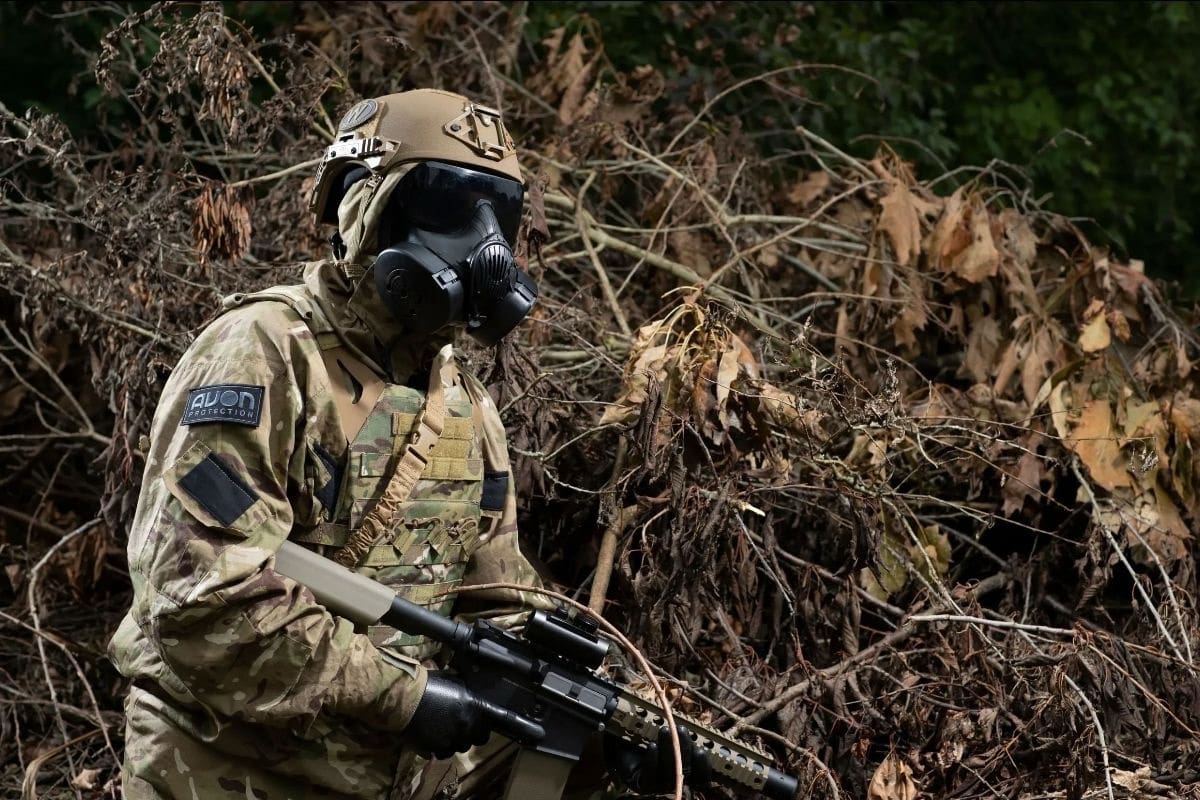
Avon Protection’s FM50 respirator. 

Avon Protection’s FM50 respirator, together with the FM61EU filter, is designed to protect the wearer from CBRN threats in line with latest NATO requirements. The twin filter conformal system offers low-profile protection and very low breathing resistance for military, anti-terrorism and peace-keeping operations.

Avon Protection was awarded the 10-year NSPA FM50 contract in 2020, enabling NATO nations and partners to purchase the FM50 respirator, MP-PAPR, ST53, filters and related accessories. In total, Avon Protection has now delivered more than 100,000 FM50s to more than ten NATO nations, along with associated filters and accessories.

Steve Elwell, President, Avon Protection, said: “The FM50 is the most operationally proven and widely deployed battlefield respirator in the world, and we are pleased that a key European MoD has elected to continue protecting its personnel with this world-leading respirator.”

Connector Technology at the Core of Ground Vehicle Modernisation

December 12th, 2025

Ground combat vehicles are evolving from single-purpose, hardware-fixed assets into software-defined, upgradeable systems. This flexibility demands rugged, high-reliability connector technologies capable of successive upgrades without requiring full redesigns of harnesses or structural components. Scalable circular connectors offer the mechanical robustness, electrical performance and environmental sealing essential to support open-architecture electronics, electrified propulsion and field-reconfigurable payloads. Here, Sean Fitall, European product manager at connector specialist PEI-Genesis explores the role of scalable connectors in the next generation of ground military vehicles.

Among the most widely adopted solutions supporting this transformation are connectors built to the MIL?DTL?38999 specification. Proven over decades of use in aerospace and defence, these circular connectors are valued for their high-density contact arrangements, ruggedised construction and flexibility in handling signal, data and power within a single interface. Their durability and adaptability make them a natural fit for next-generation vehicle systems.

These connectors are compatible with open standards like VICTORY, NATO Generic Vehicle Architecture (GVA) and the Modular Open Systems Approach (MOSA), which all promote interoperable, upgradable systems through standardised interfaces.

By using consistent connector geometries, contact layouts and coupling mechanisms, system integrators can reduce the complexity of vehicle wiring harnesses and more easily integrate new mission systems from various suppliers.

Powering electrified platforms

As open-architecture frameworks advance, vehicle electrical systems must support not only signal and data, but also high-voltage, high-current demands driven by battery-electric propulsion, traction inverters and power-intensive subsystems. Traditional low-power connectors often fall short due to limitations in current capacity, heat dissipation and sealing performance.

To address these challenges, high-power variants based on the MIL?DTL?38999 form factor have been developed. Incorporating advanced contact technologies like Amphenol’s RADSOK®, these connectors support up to 1,000 A depending on configuration, while retaining the sealing, vibration resistance and coupling of their signal-grade counterparts. This allows designers to standardise interfaces for both power and signal across the platform.

Such standardisation simplifies integration, supports distributed power architectures and helps reduce system weight by allowing energy components to be positioned closer to loads. Many variants also offer integrated voltage and temperature sensing, enabling predictive maintenance and improved diagnostics.

Built for the battlefield

As the digital infrastructure of the vehicle becomes more central to its mission success, ensuring seamless integration of new subsystems is equally vital. LiDAR, EO/IR cameras, radar and AI accelerators all require high-speed, low-latency interconnects that can operate reliably in demanding electromagnetic environments. MIL?DTL?38999 connectors are well suited to this task, offering coax, twinax, quadrax and fibre-optic contacts in a single shell with robust EMI shielding.

Their shielding effectiveness and mechanical resilience make them ideal for carrying real-time data in the presence of high-power systems, vehicle-borne jammers and harsh vibration. By supporting high-bandwidth sensor fusion and AI-driven situational awareness tools, these connectors enable advanced combat capabilities without compromising system integrity.

Plug-and-fight capabilities

With growing system complexity and evolving mission needs, platform flexibility has become a critical design priority. Modern doctrine increasingly demands vehicle platforms that can be rapidly reconfigured for different mission requirements.

One day a vehicle may support electronic warfare operations, the next, it may need to carry a counter-UAS suite or deploy advanced communications systems. This flexibility hinges on the standardisation of signal and power interfaces. When platforms use the same MIL?DTL?38999 connector configurations across payload types, mission kits can be added, removed or swapped without rewiring or modifying the base infrastructure.

This enables true plug-and-fight capability, allowing teams to reconfigure platforms in the field, without the delays and costs of depot-level intervention. Power variants of these connectors ensure that even high-demand payloads, such as radar arrays or directed-energy systems are safely and reliably supported. This not only simplifies integration, but also enhances adaptability, readiness and operational tempo across different theatres.

Scalable solutions for long-term readiness

Ensuring long-term platform flexibility requires connector systems that can support frequent technology upgrades without redesigning the vehicle’s core infrastructure. While military vehicles may remain in service for decades, onboard electronics typically evolve on much shorter cycles.

To bridge this gap, connector infrastructure must be scalable, standardised and robust, enabling the integration of new technologies without compromising physical or electrical integrity. MIL?DTL?38999-based systems provide this stability, offering a dependable foundation for layering future capabilities over time.




Whether integrating AI-enabled edge computing, advanced sensors or electrified propulsion systems, these connectors help ensure that platforms remain compatible, reconfigurable and resilient, supporting the broader shift towards open, modular and software-defined vehicles.


One example of this scalability in action is the Amphenol Rhino series, a high-power connector solution built on the MIL?DTL?38999 mechanical platform. Designed to meet the demands of modern military systems, Rhino combines the rugged construction of Series III shells with high-current RADSOK® contacts. This enables power handling up to 1,000 A in a sealed, touch-safe design, making it well suited for electrified drive systems, high-power subsystems and modular payloads.

To support the deployment of these scalable solutions, PEI-Genesis offers extensive stock, in-house engineering expertise and rapid assembly services. This enables fast delivery of customised Rhino assemblies, helping integrators reduce lead times and adapt quickly to evolving system requirements, even late in the programme lifecycle.

As modern ground vehicles become more modular, electrified and digitally networked, the importance of connector technology has never been greater. Whether managing high-speed data from advanced sensors or distributing high-voltage power across hybrid propulsion systems, scalable connectors based on the MIL?DTL?38999 standard provide the durability, flexibility and interoperability required by today’s military platforms.

To find out more about the wide range of military grade connectors offered by PEI-Genesis, visit www.peigenesis.com.